
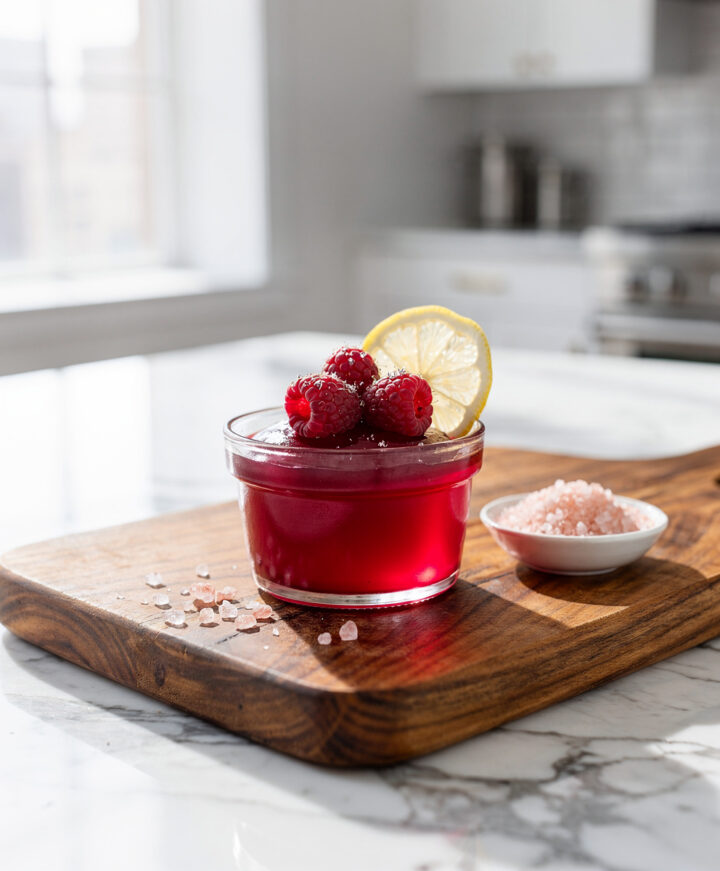
I first stumbled into this recipe during a frantic weeknight dinner when I needed something quick and healthy. That single bite of tart, jiggly perfection turned my 3 ingredient gelatin recipe for weight loss into a weekly staple.
Here is the thing nobody tells you: the viral gelatin trick works, but most versions taste like a science experiment. Rubbery, bland, or loaded with artificial sweeteners that spike cravings instead of quieting them.
After testing six versions of this recipe over four weeks, I landed on three real ingredients that actually deliver: unflavored grass-fed gelatin, strongly brewed hibiscus tea, and fresh lemon juice. That is it. The science behind why it satisfies is genuinely interesting, and I am going to walk you through all of it. Regular kitchen, regular time, great results. For more on how this fits into a broader weight loss strategy, check out the complete gelatin weight loss guide.
Jump to:
- What Makes This 3 Ingredient Gelatin Recipe Actually Work for Weight Loss
- The 3 Ingredients: What to Buy and What to Avoid
- The Recipe: Step-by-Step Instructions
- 3 ingredient gelatin recipe for weight loss
- The Pink Salt Difference: Tiny Pinch, Real Impact
- When to Eat It: The Timing Strategy That Actually Moves the Needle
- Meal Prep, Storage, and What to Do When It Does Not Set
- What This Recipe Can and Cannot Do for Weight Loss
- Who Should Be Cautious With This Recipe
- The Simplest Gelatin Snack You Will Actually Keep Making
- FAQs about 3 ingredient gelatin recipe for weight loss
What Makes This 3 Ingredient Gelatin Recipe Actually Work for Weight Loss
The Glycine-Satiety Connection (Not Just Low Calorie)
Most people assume this low calorie gelatin snack works simply because it is almost calorie-free. The real story is more interesting.
Unflavored gelatin is approximately 88% protein by dry weight. The dominant amino acid is glycine, and glycine does something specific inside your body: it stimulates the release of glucagon-like peptide-1, or GLP-1. That is a satiety hormone. It is the same pathway targeted by some of the most talked-about appetite-suppressing medications on the market right now.
One tablespoon (7g) of unflavored gelatin delivers about 6 grams of protein and only 25 calories, with zero fat and zero carbs. Compare that to a 150-calorie granola bar or a 200-calorie cookie. The gelatin satiety protein ratio is genuinely impressive.
This is not sugar-free Jell-O. That product contains zero grams of protein, artificial dyes, and aspartame. Not the same food. Not the same result.
Why Hibiscus Tea Is the Right Liquid Base
Hibiscus is not decorative here. It is doing real work.
The deep ruby color comes from anthocyanins, a class of antioxidants linked in peer-reviewed studies to reduced fat accumulation. Hibiscus tea adds a natural tartness that makes this gelatin snack for appetite control taste finished and bright without a single gram of sugar. It is also caffeine-free, which means you can eat this at 9pm and sleep fine. Zero calories, real flavor, and a functional benefit. That is why hibiscus is the liquid base.
The 3 Ingredients: What to Buy and What to Avoid
Ingredient Breakdown with Label Guidance
Read your labels carefully. The ingredient quality matters more here than in almost any other recipe because there are only three of them.
- Unflavored Gelatin: Must be unsweetened and unflavored. Look for grass-fed options like Vital Proteins, Great Lakes, or NOW Foods. One packet equals 7 grams, which equals one tablespoon, which equals roughly 25 calories and 6 grams of protein.
- Hibiscus Tea: Use pure dried hibiscus flowers or single-ingredient tea bags. Avoid blends with added sugar or vague "natural flavors." Steep two bags per one cup for a strong, deeply colored base.
- Fresh Lemon Juice: Fresh only. Bottled lemon juice contains citric acid and sodium benzoate, which flatten the flavor. One tablespoon from half a fresh lemon adds about 3 calories and a clean, bright zip.
A tiny pinch of pink Himalayan salt is technically optional, but I always include it. More on that in the next section.
What NOT to Use: The Enzyme Trap and Sugar Trap
Here is the rule most gelatin recipes mention but never explain. Certain raw fruits will completely prevent your gelatin from setting, and it is not random.
Pineapple contains bromelain, papaya contains papain, raw kiwi contains actinidin, and raw figs contain ficin. These are proteolytic enzymes. They physically cut the protein chains in gelatin before they can cross-link and form a gel matrix. You will end up with liquid, no matter how long you refrigerate it.
Always use berries or fresh citrus juice. Always.
Also avoid pre-sweetened gelatin powders entirely. A standard Jell-O packet runs 70 to 80 calories per serving, 17 grams of sugar, and contains Red 40 and Blue 1. That is a sugar-free gelatin dessert in name only.
The Recipe: Step-by-Step Instructions
Ingredients and Measurements
- 1 packet (7g) unflavored grass-fed gelatin powder
- 1 cup strongly brewed hibiscus tea, hot but not boiling
- 1 tablespoon fresh lemon juice
- Optional: 1 small pinch pink Himalayan salt
- Optional: 3 to 5 drops liquid monk fruit or stevia
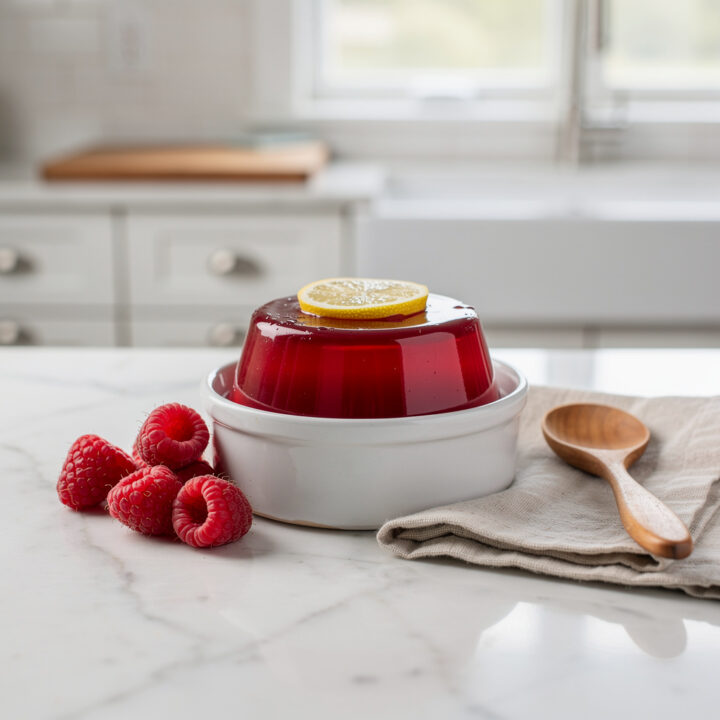
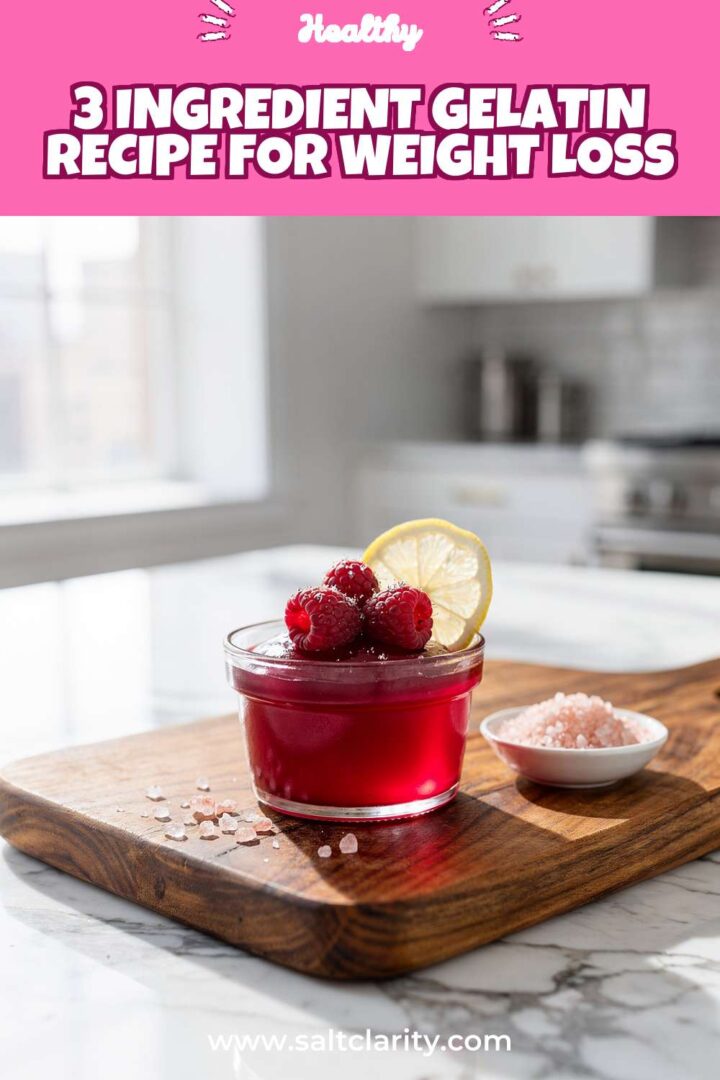
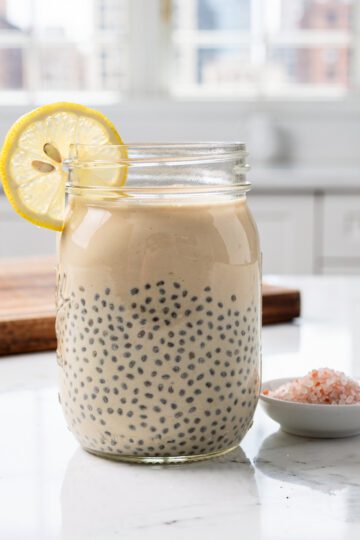
- Optional garnish: 3 fresh raspberries or a lemon slice
Yield: 1 serving. Prep: 5 minutes. Chill: 2 to 4 hours. Approximately 28 calories, 6g protein, 1g carbs, 0g fat.
Print
3 ingredient gelatin recipe for weight loss
A tart, jiggly low-calorie gelatin snack made with unflavored grass-fed gelatin, strongly brewed hibiscus tea, and fresh lemon juice. This protein-rich treat supports satiety and helps curb cravings without artificial ingredients.
- Total Time2h5min
- Yield1 serving 1x
- DietGluten Free, Dairy Free, Low Calorie
Ingredients
- 1 packet (7g) unflavored grass-fed gelatin powder
- 1 cup strongly brewed hibiscus tea, hot but not boiling
- 1 tablespoon fresh lemon juice
- 1 small pinch pink Himalayan salt (optional)
- 3 to 5 drops liquid monk fruit or stevia (optional)
- 3 fresh raspberries or a lemon slice for garnish (optional)
Instructions
- Bloom the gelatin: Pour the gelatin powder into a small bowl. Add 2 tablespoons of cold water, stir briefly, and let sit for 2 minutes until the granules swell.
- Brew the tea: Steep 2 hibiscus tea bags in 1 cup of water heated to 180 degrees F for 5 minutes. Remove the bags.
- Dissolve: Pour the hot hibiscus tea over the bloomed gelatin. Stir for a full 60 seconds until no visible granules remain.
- Add flavor: Stir in the fresh lemon juice, pink salt (if using), and sweetener (if using).
- Set: Pour into a ramekin, cup, or silicone mold. Refrigerate for at least 2 hours, or 4 hours for a firmer texture.
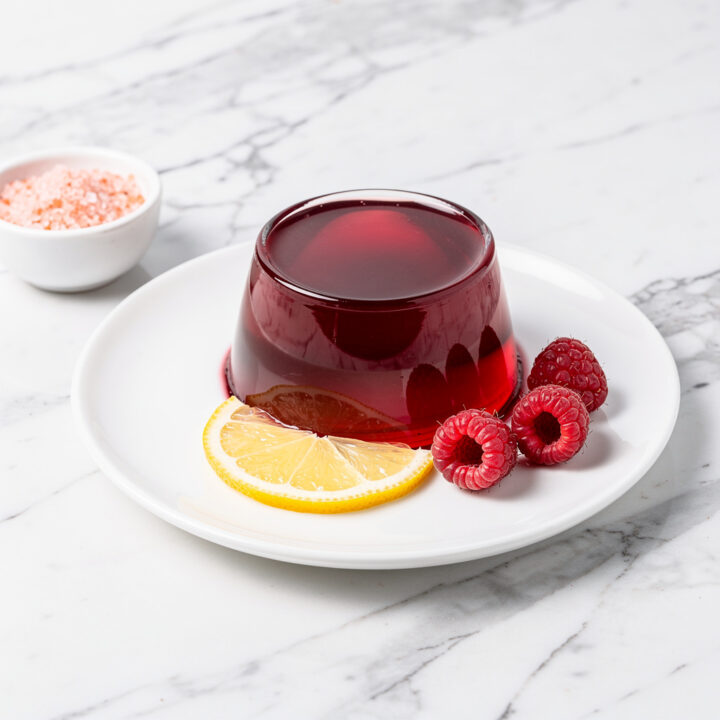
- Serve: Eat cold, straight from the cup or inverted onto a plate. Garnish with raspberries or lemon slice if desired.
Notes
Do not use raw pineapple, papaya, kiwi, or figs as they contain enzymes that prevent gelatin from setting. Store covered in the refrigerator for up to 5 days. Do not freeze.
- Prep Time: 5min
- Cook Time: 0min
- Category: snack
- Method: no-cook
- Cuisine: American
Nutrition
- Serving Size: 1
- Calories: 28
- Sugar: 0
- Sodium: 5
- Fat: 0
- Saturated Fat: 0
- Unsaturated Fat: 0
- Trans Fat: 0
- Carbohydrates: 1
- Fiber: 0
- Protein: 6
- Cholesterol: 0
Step-by-Step Directions
Bloom the gelatin. Pour the gelatin powder into a small bowl. Add 2 tablespoons of cold water, stir briefly, and let sit for 2 minutes. The granules will swell and absorb the water. Do not skip this. Un-bloomed gelatin creates lumps every time.
Brew the tea. Steep 2 hibiscus tea bags in 1 cup of water heated to 180 degrees F. Not boiling. Temperatures above 212 degrees F degrade anthocyanins and can denature the gelatin protein. Steep for 5 minutes, then remove the bags.
Dissolve. Pour the hot hibiscus tea over the bloomed gelatin. Stir for a full 60 seconds until no visible granules remain. Lift the spoon; the liquid should run completely clear.
Add flavor. Stir in the fresh lemon juice, your pink salt pinch, and sweetener if using.
Set. Pour into a ramekin, cup, or silicone mold. Refrigerate for at least 2 hours, or 4 hours for a firmer texture.
Serve. Eat cold, straight from the cup or inverted onto a plate.
The Pink Salt Difference: Tiny Pinch, Real Impact
Why Pink Himalayan Salt Changes This Recipe
This is where Salt Clarity earns its name.
A single small pinch of pink Himalayan salt does something that no other ingredient in this 3 ingredient gelatin recipe for weight loss can do: it wakes up the flavor without adding sodium that matters at the scale of a pinch.
Salt suppresses bitterness. Hibiscus tea carries a subtle bitter edge that can make the finished gelatin taste medicinal. A micro-pinch of pink salt rounds that edge off and makes the tartness from the lemon taste cleaner and brighter. Your brain reads the result as more satisfying.
Pink Himalayan salt also contains trace minerals including magnesium, potassium, and calcium, though the amounts per pinch are small. What is not small is the sensory effect. Tiny pink-salt pinches, big flavor. That is the whole philosophy here, and it applies perfectly to this sugar-free gelatin snack. You are not adding sodium to your diet in any meaningful way. You are making a 28-calorie snack taste like something you actually want to eat again tomorrow. If you enjoy this approach, you might also like the pink salt gelatin trick for weight loss.
When to Eat It: The Timing Strategy That Actually Moves the Needle
The Pre-Meal Window
Timing this gelatin snack for appetite control correctly is what separates passive snacking from a real weight loss strategy.
Eat it 20 to 30 minutes before a main meal. Research on protein preloading consistently shows a 10 to 15 percent reduction in calories consumed at the following meal. The protein signals fullness before you sit down to eat. Make it the night before, keep it in the fridge, and pull it out while you are cooking dinner. That is the move.
For a deeper look at how pink Himalayan salt supports weight management as part of a full daily approach, the himalayan pink salt weight loss guide covers the complete picture.
The 3 PM Snack Swap
Swapping your afternoon snack for this low calorie gelatin snack creates a daily calorie deficit of 120 to 190 calories with zero additional effort. A granola bar or small bag of crackers runs 150 to 220 calories. This runs 28.
Over 30 days, that swap equals a 3,600 to 5,700 calorie deficit. Roughly 1 to 1.6 pounds of passive loss, purely from the exchange. One critical condition: it only works as a swap, not an addition to your current eating.
Meal Prep, Storage, and What to Do When It Does Not Set
Batch Prep for the Full Week
This unflavored gelatin recipe scales perfectly. Multiply everything by five, brew a larger pot of hibiscus tea, and pour into five individual ramekins or one 8x8 silicone dish you can slice later. Twelve minutes of active prep, then the fridge does the rest.
Store covered in the refrigerator for up to five days. Do not freeze it. Freezing breaks the gel matrix and leaves you with a watery, grainy texture that no amount of re-chilling will fix. For another great make-ahead option, try the electrolyte gelatin recipe.
Troubleshooting When It Does Not Set
- Still liquid after 4 hours: The tea was too hot when you added the gelatin. Use 180 degrees F maximum. If you can hold your hand near the steam for three seconds without pulling away, the temperature is safe.
- Too rubbery or firm: Too much gelatin or not enough liquid. Use exactly one packet per one full cup. Do not estimate.
- Grainy or lumpy texture: The gelatin was not bloomed first, or it was added to cold liquid. Always bloom in cold water for two full minutes before dissolving in warm tea.
What This Recipe Can and Cannot Do for Weight Loss
Realistic Outcomes Worth Knowing
I want to be straight with you here, because I think honesty is what makes a food source trustworthy.
This grass-fed gelatin weight loss recipe is not burning fat. It does not speed up your metabolism or target any specific area of your body. Anyone who tells you otherwise is selling something.
What it genuinely does: creates short-term satiety through protein and volume, replaces higher-calorie snacks without deprivation, and supports gut lining health as a secondary benefit because glycine is a precursor for collagen synthesis in the gut mucosa. Real benefits. Measurable ones.
The recipe works because of consistency and context, not magic. Used daily as a snack swap or pre-meal tool, this 3 ingredient gelatin recipe for weight loss becomes one of the quietest, most sustainable calorie-reduction habits in your routine. If you want a drink version, consider the natural Mounjaro recipe for a similar effect.
Try smarter, not stricter.
Who Should Be Cautious With This Recipe
This recipe uses three whole-food ingredients and is low-risk for most healthy adults. A few groups need specific guidance before making it a daily habit.
People with kidney disease or a history of kidney stones:
Gelatin contains hydroxyproline which metabolizes into oxalate in the body. Daily gelatin consumption increases oxalate load over time, which raises kidney stone risk in people already prone to calcium oxalate stones. If you have kidney disease or a history of stones, check with your doctor before using this as a daily snack.
People with a known beef or animal protein allergy:
Standard unflavored gelatin is bovine-derived. If you have a sensitivity to beef protein, this recipe is not appropriate in its standard form. There is no direct substitution that replicates the glycine content, agar-agar works structurally but does not provide the same satiety mechanism.
People sensitive to hibiscus or who take blood pressure medication:
Hibiscus tea has documented mild antihypertensive effects, it lowers blood pressure modestly in regular daily consumption. For most people this is a benefit. If you are already taking blood pressure medication, drinking concentrated hibiscus daily could compound that effect. Mention it to your prescriber if you plan to eat this every day.
Pregnant or breastfeeding women:
Hibiscus tea is generally not recommended during pregnancy due to its mild uterotonic properties in high concentrations. One cup daily in a recipe context is a low dose, but the conservative approach is to confirm with your healthcare provider before making this a daily habit during pregnancy or breastfeeding.
People with a history of disordered eating:
This recipe is intentionally positioned as a pre-meal appetite management tool and a snack swap. Any structure that involves eating less by design should be approached carefully by anyone with a history of restriction. If that applies to you, use this as a satisfying food choice rather than a control tool.
People on sodium-restricted diets:
The pink salt pinch adds approximately 55mg of sodium per serving, low enough to be irrelevant for most healthy adults. If your doctor has prescribed a strict daily sodium ceiling, count it or omit the salt entirely.
For a full breakdown of how pink salt wellness recipes interact with the body at different sodium levels and what side effects to watch for, the guide on pink himalayan salt cleanse side effects covers the relevant thresholds.
The Simplest Gelatin Snack You Will Actually Keep Making
Three ingredients. Twenty-eight calories. Six grams of protein. A mechanism that actually makes biological sense. And a pinch of pink salt that makes the whole thing taste like something you chose on purpose, not something you tolerated for your goals.
This 3 ingredient gelatin recipe for weight loss is not a trend. It is a tool. Make it Sunday, eat it all week, and notice how much less you want at dinner. For another easy option, check out the Himalayan pink salt weight loss drink recipe.
Let me know how it turned out in the comments, and do not forget to tag @SaltClarity on Pinterest so I can see your version.
FAQs about 3 ingredient gelatin recipe for weight loss
Gelatin is a high-protein, low-calorie food that can promote feelings of fullness, helping reduce overall calorie intake. It contains glycine and other amino acids that support metabolism and gut health, both important factors in weight management. Adding a simple 3 ingredient gelatin recipe for weight loss to your diet can be an easy, effective strategy.
The three ingredients in this specific recipe are unflavored grass-fed gelatin powder, strongly brewed hibiscus tea, and fresh lemon juice. Hibiscus tea is used as the liquid base because its anthocyanins add a natural tartness and deep ruby color without any sugar or calories. Fresh lemon juice adds brightness and enhances the flavor without a single gram of added sugar. A small pinch of pink Himalayan salt is technically optional but strongly recommended, as it suppresses hibiscus's bitter edge and makes the entire snack taste significantly more satisfying.
Most nutrition experts suggest consuming 10-20 grams of gelatin per day to support weight loss goals. This amount is enough to boost protein intake and promote satiety without adding excessive calories to your diet. Always use unflavored, unsweetened gelatin to keep your 3 ingredient gelatin recipe for weight loss as clean as possible.
Knox unflavored gelatin is an excellent choice for weight loss because it is pure protein with zero added sugar, fat, or artificial ingredients. Each serving provides about 6 grams of protein, which helps curb appetite and preserve lean muscle mass during a calorie deficit. It works perfectly as the base ingredient in any 3 ingredient gelatin recipe for weight loss.
The best time to eat gelatin for weight loss is between meals as a low-calorie snack or before bedtime, as glycine in gelatin may support better sleep and overnight metabolism. Consuming it before a meal can also help reduce appetite, leading to smaller portion sizes. Incorporating a 3 ingredient gelatin recipe for weight loss into your daily routine consistently will yield the best results.
Flavored gelatin products like Jell-O often contain added sugars, artificial colors, and sweeteners that may hinder weight loss efforts. Sugar-free versions are a better option but still contain artificial additives that some people prefer to avoid. For the healthiest results, stick to a 3 ingredient gelatin recipe for weight loss using unflavored gelatin combined with natural, whole-food ingredients.
💬 Let's Stay Connected!
For daily recipes, kitchen tips, and exclusive content, follow me on:
👉 Facebook for behind-the-scenes & community fun
👉 Pinterest for visual inspiration & meal ideas
👉 X (Twitter) for quick tips & trending recipes
📲 Join the flavor journey, your next favorite recipe is just a follow away!
Disclaimer: This content is provided for general informational and educational purposes only. It is not intended as medical, nutritional, or professional advice. Always consult a qualified healthcare professional or registered dietitian before making changes to your diet, health routine, or lifestyle. Individual needs and results may vary
Leave a Reply