
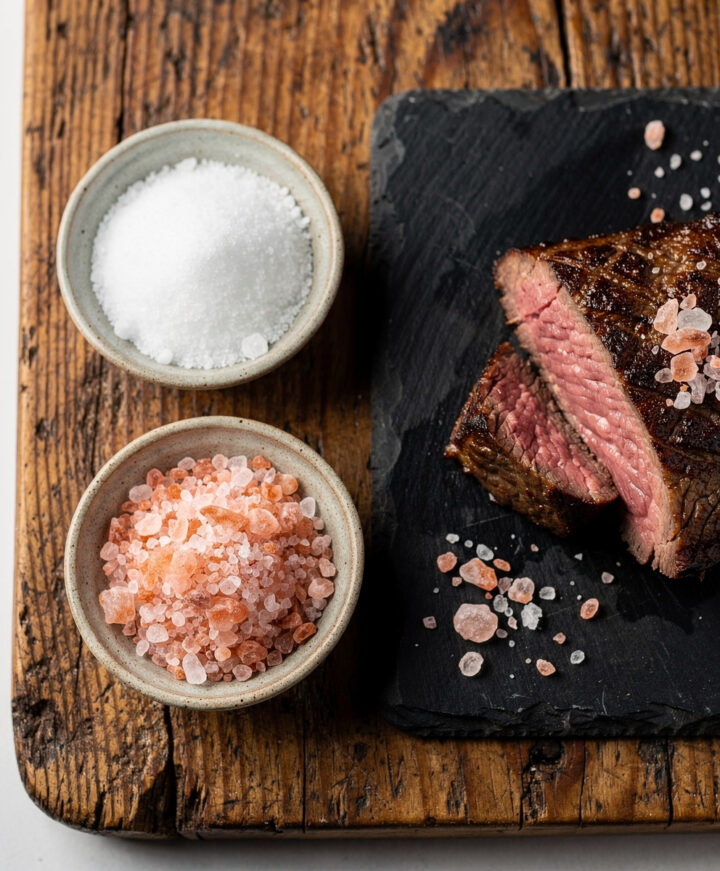
Introduction
You can elevate your everyday meals from good to great with one simple swap in your seasoning routine. Keep a small bowl of coarse pink salt next to your stove for a final, crunchy sprinkle that makes flavors pop, while your trusty kosher salt handles all the heavy lifting during cooking.
I still remember leaning over my grandma's old stove in Queens, where the faint sizzle and tiny pink-salt flakes dancing atop her roasted chicken taught me more about seasoning than any cookbook ever could. That moment sparked a lifelong fascination with salt's ability not just to flavor, but to transform. Today, understanding the difference between cooking and finishing salts-and specifically when to use pink salt-is essential for anyone who loves food that tastes amazing without extra fuss or wasted ingredients.
The focus keyword Finishing Vs Cooking Salt: When To Use Pink Salt is at the heart of this guide. We're going beyond generic recipes that call for "a pinch of salt" to decode the science, texture, and timing behind seasoning choices. I'll break down the why and the how that turn pink Himalayan salt from an Instagram prop into a practical, flavor-forward tool you can use in your regular kitchen on a regular weeknight.
If you've ever wondered whether to reach for your coarse pink salt or stick with kosher salt, especially for recipes with pink Himalayan salt or those famous pink salt sole water recipes, this article is designed with you in mind. Let's get into the details so the next time you cook or finish a dish, you'll do it like a pro.
Jump to:
- 1. The Core Principle: Job Description Defines Everything
- 2. The Texture & Science Breakdown: Why Grain Size is King
- 3. Pink Himalayan Salt: A Finishing Salt, Not a Myth
- 4. Your Decision Guide: When to Use Each Salt (With Examples)
- 5. The Expert Technique: How to Finish a Dish Properly
- 6. The One Major Exception: When Pink Salt Is a Cooking Salt
- 7. Pro Equipment & Storage: Protecting Your Investment
- FAQs about Finishing Vs Cooking Salt: When To Use Pink Salt
1. The Core Principle: Job Description Defines Everything
Understanding Finishing Vs Cooking Salt: When To Use Pink Salt starts with recognizing the fundamental roles salt plays in the kitchen. Salt isn't just salt. Different salts have distinct jobs: some work in your food, seasoning every bite, while others work on your food, adding texture, crunch, and burst-like flavor at the very end.
The "Workhorse": Defining Cooking Salts
Cooking salts, like kosher salt or fine sea salt, are all about integration. Their fine or medium grain size allows them to dissolve quickly and evenly. Whether you're seasoning pasta water, building a sauce, or brining chicken, a cooking salt dissolves to season a dish from inside out.
Iodized table salt falls into this category technically, but since it carries additives and a sharper, sometimes metallic flavor, many cooks avoid it for serious seasoning. Kosher salt, with its hollow crystal structure, is preferred across professional kitchens because it disperses flavor predictably, without the risk of clumping or uneven pockets of saltiness.
When you add kosher salt incrementally throughout cooking, you build layers of flavor rather than one big sodium bomb. That's what I call "tiny pink-salt pinches, big flavor" logic, but applied with the right salt for the right job.
The "Showpiece": Defining Finishing Salts
Finishing salts are all about texture and visual appeal. Think large, flaky crystals like Maldon salt or coarse pink salt. These salt crystals don't disappear into food immediately. They linger, creating delightful crunches and pops of flavor that heighten the eating experience with every bite.
Their crystal structure is chunky or flaky and dissolves slowly on your tongue. You want each grain to taste distinct-a salty punctuation mark rather than a flooded paragraph. The pink Himalayan salts used as finishing salts fall precisely into this category because their trace minerals and subtle mineral flavor get lost if melted away.
Using pink salt as a finishing salt allows you to savor its delicate mineral notes and vibrant rosy color. It's the salt's time to shine on the plate, adding that last luxurious touch without overwhelming your dish.
2. The Texture & Science Breakdown: Why Grain Size is King
The secret to Finishing Vs Cooking Salt: When To Use Pink Salt lies heavily in how it feels and dissolves-and that all starts with grain size.
Why Kosher Salt is a Chef's Secret Weapon
Kosher salt's irregular, lightweight flakes are easy to pinch and sprinkle. Its crystal structure means it dissolves predictably, infusing food gradually, making it a reliable seasoning partner for home cooks and pros alike.
When you sprinkle kosher salt on a pot of pasta water, it dissolves quickly, seasoning the noodles evenly. When you use it in a dough, it blends flawlessly for consistent flavor. Its texture grants precise control, which means no unpleasant surprises or salty spots.
The Delayed Dissolution of a Finishing Crystal
Contrast kosher salt with a flaky finishing salt like pink Himalayan or Maldon. These crystals are denser, larger, and have a smaller surface area relative to their volume. When sprinkled on a hot seared steak, they don't dissolve right away.
Instead, they slowly melt on the tongue, delivering bursts of saltiness and crunch that contrast beautifully with tender meat or creamy avocado. That pause in dissolution is where the magic happens: crunch + cream + zip in every bite.
If you've ever wondered why flaky salt looks so elegant on top of roasted vegetables or desserts, it's because it doesn't just season, it adds layers of texture and visual appeal no cooking salt can match.
3. Pink Himalayan Salt: A Finishing Salt, Not a Myth
Pink Himalayan salt has been surrounded by a flurry of marketing claims, from health benefits to mysterious mineral counts. But the truth about this salt's value lies squarely in the kitchen, not the medicine cabinet.
The Truth About Those 84 Minerals
Yes, pink Himalayan salt contains multiple trace minerals, including iron oxide, which gives it the characteristic rose-hued color. But-and I say this as someone who loves pink salt for seasoning-the actual mineral content is tiny. You'd have to eat unsafe amounts of salt to get any meaningful dose.
So when you reach for pink salt in your recipes with pink Himalayan salt or himalayan pink salt brine recipe, remember that the "health benefits" story is mostly myth.
The real worth lies in how those trace minerals subtly shift the flavor profile. The salt tastes less harsh, a little sweeter and rounded compared to iodized or kosher salts. This makes pink Himalayan salt recipes stand out when used to finish dishes, bringing a nuanced complexity.
The Heat Test: Why Cooking Often Wastes It
Pink salt's delicate mineral notes and rosy color can't always survive heat-especially prolonged wet heat like in soups, stews, or sauces. Its flavor can become muted, sometimes even slightly bitter, and that pretty pink color fades into pale saltiness.
When you cook a dish with recipes that call for Himalayan pink salt, such as slow-simmered chili or baked casseroles, the benefits of pink salt's unique qualities are lost-and you're paying extra dollars for something you won't actually taste.
This is why many chefs reserve pink salt as a finishing salt. Its qualities shine on the food, rather than in it.
4. Your Decision Guide: When to Use Each Salt (With Examples)
Putting Finishing Vs Cooking Salt: When To Use Pink Salt into practice means knowing exactly when to reach for each salt so your dishes taste perfectly balanced without any wasted seasoning.
Use Kosher or Fine Sea Salt For:
Seasoning Pasta Water: A cup of kosher salt in boiling water seasons pasta as it cooks into the noodle's core, a fundamental step for restaurant-quality pasta dishes.
Baking: Fine kosher or sea salt blends smoothly in breads, cakes, and cookies for even seasoning without surprise crunchy bits.
Brines & Curing: Whether you're making a himalayan pink salt brine recipe or a quick pickle, kosher salt's complete dissolution is essential to extracting moisture and building flavor.
Sautéing & Building Sauces: Use kosher salt while sautéing aromatics or simmering tomato sauces to layer saltiness integrating fully.
Use Pink Salt or Flaky Finishing Salt For:
Seared Meats & Fish: Once off the pan or grill, sprinkle coarse pink Himalayan salt crystals on steak or scallops. You'll taste those subtle minerals and enjoy the crunch.
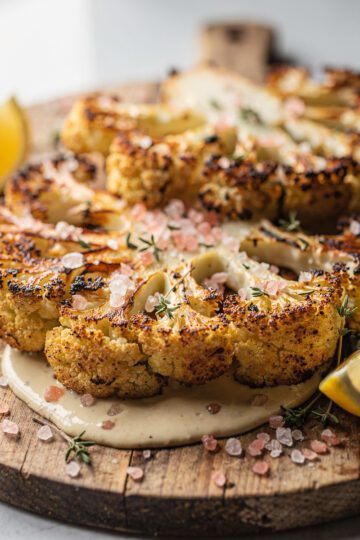
Roasted Vegetables: Caramelized Brussels sprouts or sweet potatoes get a big flavor boost from a scattering of flaky pink salt at the end.
Chocolate & Caramel Desserts: Where sweet meets salty, a few flaky pink salt crystals balance richness without melting away too fast.
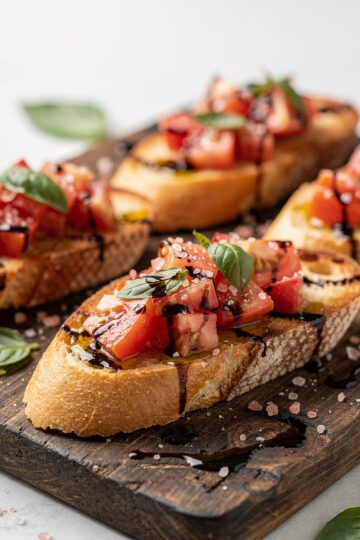
Fresh Salads & Avocado Toast: A quick pinch of pink salt adds a crisp, bright finish that's totally Instagram-worthy.
If you want to experiment with recipes using himalayan pink salt in drinks or other preparations, check out my Ginger Turmeric Lemon Pink Salt Shot and Pink Salt Sole Water Recipe for more ideas.
5. The Expert Technique: How to Finish a Dish Properly
Knowing Finishing Vs Cooking Salt: When To Use Pink Salt means getting your timing and sprinkle technique right for the biggest impact.
The High Sprinkle & The Pinch
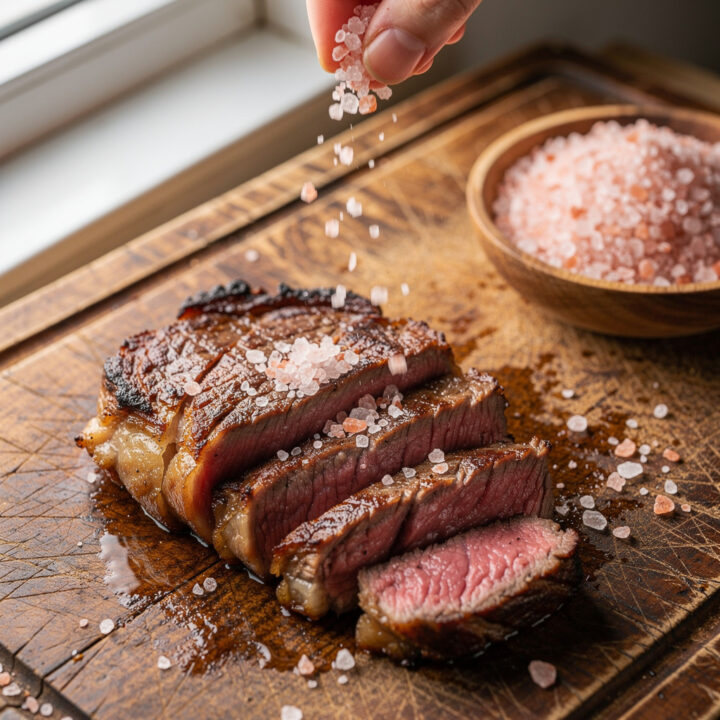
Hold the salt shaker or pinch the flakes at least a foot above your dish. This allows crystals to scatter evenly rather than dropping in clumps. Aim for one to two crystals per bite so every mouthful has crunchy bursts.
Using your fingers to feel the texture and sprinkle control is key. I always keep a tiny bowl of coarse pink salt close by for finishing. This encourages "tiny pink-salt pinches, big flavor" moments and keeps me from overdoing it.
Timing is Everything: The Last Step
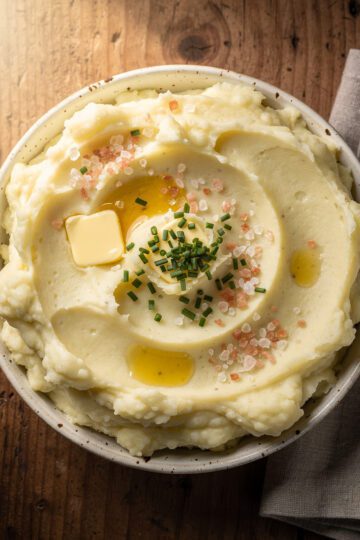
Adding finishing salt too early is a rookie mistake. Apply it after plating and after any last-minute drizzle of sauce or oil. This way, the crystals stay crisp and visually appealing on the food's surface.
Salt that dissolves prematurely will rob you of that satisfying crunch and pop-the signature of using pink Himalayan salt block recipes or any flaky salt as a finishing touch.
6. The One Major Exception: When Pink Salt Is a Cooking Salt
Here's the exception to Finishing Vs Cooking Salt: When To Use Pink Salt you've been waiting for.
Dry-Brining or Salt-Crusting: The Slow-Dissolve Advantage
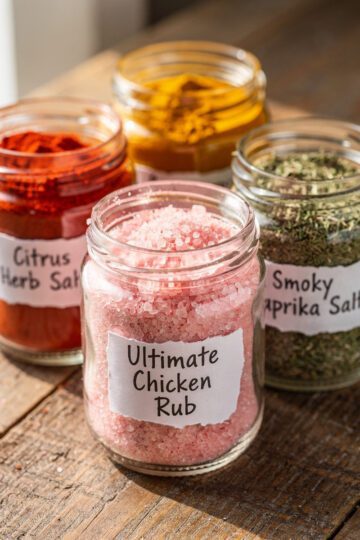
Pink salt's mineral-rich, slow-dissolving nature makes it perfect for dry-brining or salt crusts. When you apply coarse pink salt to a whole chicken or fish and let it sit, the salt gradually draws out moisture while seasoning deeply without drying out or oversalting fast.
That slow draw balances flavors and firms the proteins, leading to incredibly crispy skin and juicy meat underneath. This is especially true in himalayan pink salt chicken recipes or fish salt-crust recipes.
Unlike other salts that dissolve rapidly, pink salt crystals retain structure long enough to control moisture extraction evenly. It's a brilliant exception to the "don't cook with pink salt" rule that's rarely spelled out clearly.
7. Pro Equipment & Storage: Protecting Your Investment
To get the best out of your pink salt finishing salt or kosher cooking salt, caring for your seasoning tools and storage is a game-changer.
Why a Salt Grinder is a Game-Changer for Pink Salt
Buying coarse pink salt and using a ceramic salt grinder gives you total control over crystal size. You can grind fine for a himalayan pink salt recipe requiring powder or coarse for finishing.
A grinder preserves freshness and allows you to adapt your pink salt for multiple purposes without waste.
The Enemies of Texture: Heat and Moisture
Finish salts are sensitive; store them away from the stove, steam, or humidity. Heat and moisture cause clumping, which ruins the flaky texture and crunch that make pink salt special as a finishing salt.
Keep your salts in sealed airtight containers in a cool, dry cupboard or pantry.
This advice applies just as well to your kosher salt-for best seasoning control, store carefully to avoid moisture that causes salt cakes and clumps.
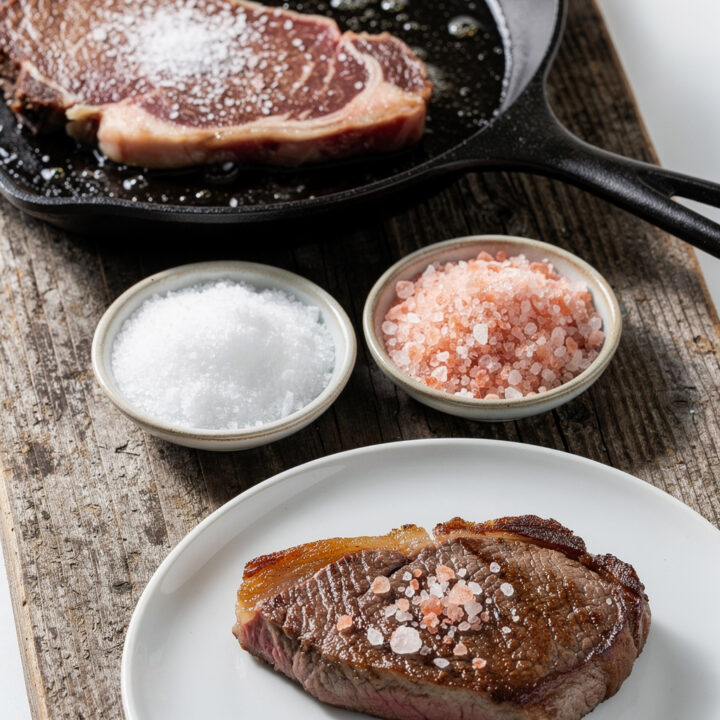
Mastering finishing versus cooking salt: when to use pink salt is about understanding texture, timing, and application. For more on cooking with pink salt and how to integrate it in your kitchen routine, check out my Pink Salt Cooking 101 and Himalayan Pink Salt Chicken Recipes to try out expert techniques in your own home.
Conclusion
Mastering salt is the quiet signature of a great cook. Let kosher salt be your reliable, everyday workhorse, building layers of seasoned flavor from within your dishes. Reserve your pink Himalayan and other finishing salts for their moment in the spotlight-the final, crunchy, visually stunning garnish that transforms a good dish into a memorable one.
Remember the rule: if it needs to disappear into the food, use a cooking salt; if it needs to proudly sit on top, use a finishing salt.
Now, go take control of your seasoning, and cook with confidence. Let me know how it turned out in the comments! Don't forget to tag Salt Clarity on Pinterest to share your pink salt seasoning success.
For more inspiration on pink salt in the kitchen, check my Himalayan Pink Salt and Ice Trick Recipe and learn about the ritual of pink salt sole cleansing with my Pink Salt Sole for Cleansing guide.
Remember, tiny pink-salt pinches bring big flavor and joy to every meal.
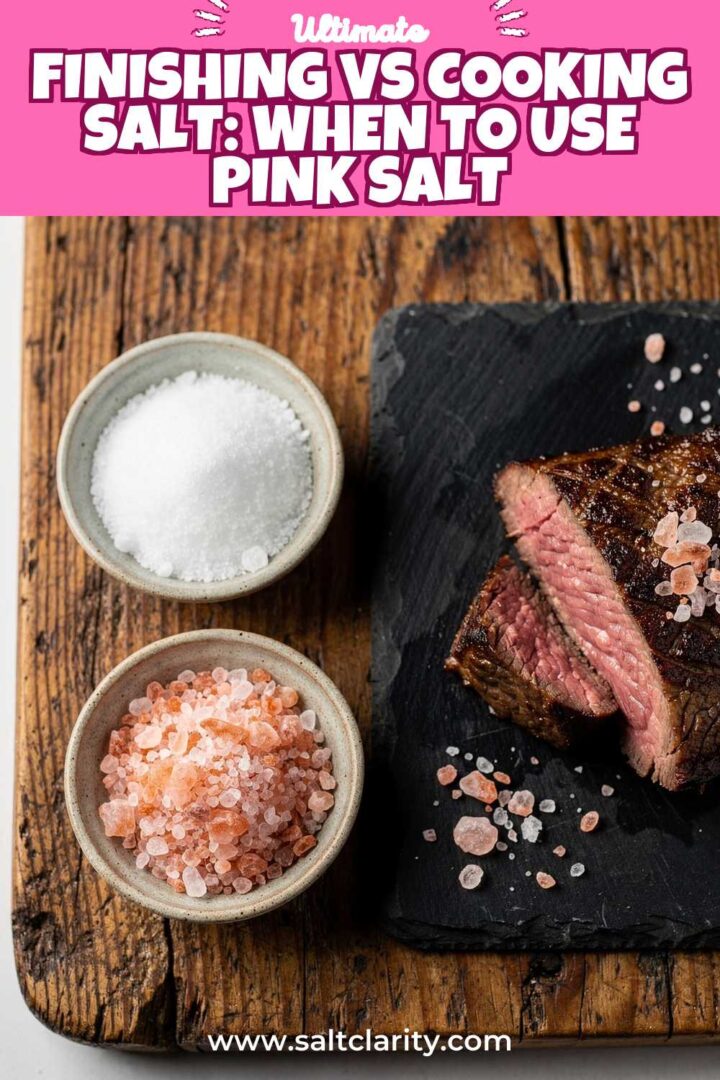
FAQs about Finishing Vs Cooking Salt: When To Use Pink Salt
Himalayan pink salt can be used for cooking, but its coarser texture and lower sodium content compared to table salt mean you might need to use more to achieve the desired saltiness. Its mineral content contributes to a slightly different flavor profile. Consider the grain size and adjust accordingly for even distribution when cooking.
Cooking salt, like table salt or kosher salt, is used during the cooking process to season food from within. Finishing salt, such as flaky sea salt or Himalayan pink salt crystals, is sprinkled on food just before serving to add a burst of flavor and texture. Finishing salts typically have larger, more distinct crystals and a more pronounced flavor.
While Himalayan pink salt does contain trace minerals, the amount is so small that it's unlikely to provide significant health benefits compared to other salts. Its unique flavor and color can enhance the culinary experience for some. Whether it's a gimmick depends on your perspective and whether you value those aesthetic and subtle flavor differences.
Avoid using finely ground Himalayan pink salt as a finishing salt, as its flavor and texture won't stand out as much. It's also not ideal for recipes where a precise sodium level is crucial, due to its varying mineral content and crystal size compared to standardized table salt. If you need iodide, use iodized salt instead of relying solely on pink Himalayan salt.
Himalayan pink salt and sea salt have similar nutritional profiles, mainly consisting of sodium chloride. Himalayan salt boasts trace minerals, but the quantity is often insignificant for health benefits. The best choice depends on flavor preference and intended use, not a substantial health difference.
Flaky sea salt, such as Maldon salt, is often considered the best for finishing due to its delicate, crispy texture and clean, bright flavor. Coarse Himalayan pink salt crystals also make a good finishing salt, adding visual appeal and a slightly different mineral flavor. Ultimately, the best finishing salt comes down to personal preference and the dish it's complementing.
💬 Lets Stay Connected!
For daily recipes, kitchen tips, and exclusive content, follow me on:
👉 Facebook for behind the scenes & community fun
👉 Pinterest for visual inspiration & meal ideas
👉 X (Twitter) for quick tips & trending recipes
📲 Join the flavor journey, your next favorite recipe is just a follow away!
Leave a Reply